


 , the radius
  of the
orbit, and the mass
of the
orbit, and the mass  of the MW,
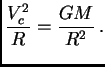 |
(5.1) |
Newton's law guarantees us that the force  is independent of
the actual density distribution of the MW, as long as it is
cylindrically symmetric.
is independent of
the actual density distribution of the MW, as long as it is
cylindrically symmetric.
The run of circular velocity with radius, so the function  , is
called the rotation curve of the MW. And so we expect
, is
called the rotation curve of the MW. And so we expect
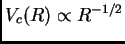 , or the disk is in differential rotation, with
decreasing with increasing . Since the period
, or the disk is in differential rotation, with
decreasing with increasing . Since the period  of the orbit
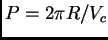 , we expect that
 .
.
So stars around the sun will each move on their own circular orbit, and so there should be a relation between the relative velocity of the star, it's distance, and it's direction in the disk. This relation is described by Oort's constants.