


Next: Absorption, scattering and reddening
Up: The main players, their
Previous: The main players, their
- 1610
- Galileo resolves the MW into stars
- 1750
- Immanual Kant suggests that some of the other Nebulae are
other galaxies, similar to the MW.
- end of 1700s
- Messier and Herschel catalogue hundreds of
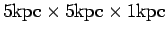
Nebulae. Herschel counts stars, and deduces that the Sun lies near the
centre of an elliptical distribution with axes ratio 5:5:1
- 1900-1920
- Kapteyn counts stars, decides wrongly that extinction
is unimportant, and deduces the MW to be
 big, with the Sun at 650 from the centre.
- 1912
- Leavitt discovers the
 relation for Cepheids.
- 1914
- Slipher measures large (1000s km s
 ) velocities for some
Nebulae, and finds evidence for rotation. The spectra he takes suggests
presence of stars, not of gas. A clear indication these are not
proto-planetary structures in the MW, but other galaxies.
) velocities for some
Nebulae, and finds evidence for rotation. The spectra he takes suggests
presence of stars, not of gas. A clear indication these are not
proto-planetary structures in the MW, but other galaxies.
- 1915
- Shapley finds the centre of the MW's globular cluster
system to be far away from Kapteyn's MW centre.
- 1920
- van Maanen claims (erroneously) that some spiral nebulae
have a large proper motion, suggesting they are within the MW.
- 1920
- Shapley and Curtis debate publicly over the size of the
MW, but the matter is not settled.
- 1923
- Hubble resolves M31 (Andromeda) into stars, using the newly
commissioned 100-inch telescope. Given the large inferred distance
means that M31 must be outside the MW. He also discovers Cepheids, and
the distance to M31 is estimated at 300kpc. So Andromeda us indeed
another galaxy.
- 1926
- Lindblad computes that Kapteyn's MW is so small, it cannot
gravitationally bind its Globular Clusters. But Shapley's much bigger MW could.
- 1927
- Jan Oort shows that several aspects of the local motion of
stars can nicely be explained if the Sun (and the other nearby stars),
is on a nearly circular motion around a position 12kpc away in the
direction of Sagittarius. Nearly the same position as found by Shapley,
and implying a much larger MW than Kapteyn's.
- 1927
- larger MW picture, where many of the nebulae are
extra-galactic MWs, gains general acceptance.
- 1929
- Hubble discovers his expansion law. His derived value is a
factor of 10 too large!
- 1930
- Trumpler uses open clusters to show the importance of
extinction, and explains why Kapteyn's measurement were faulty
- 1930-35
- Hubble's new data confirm the modern picture of
galaxies, and demonstrates van Maanen's measurements must have been
wrong.
And so in a very short time indeed, three sweeping changes in our view
of the visible universe took place:
- an 8-fold increase in the size of the MW
- the acceptance that many of the nebulae were external galaxies
- the universe is expanding
Next: Absorption, scattering and reddening
Up: The main players, their
Previous: The main players, their
Tom Theuns
平成19年2月7日