


After World War II, radio surveys discovered a very bright radio source, called Cygnus A. Given the accurate radio-position of the source, the optical counterpart was identified with a peculiar-looking cD-galaxy, whose centre is encircled by a ring of dust.
The spectral lines in the optical spectrum of Cygnus A are redshifted
to
 . In terms of a
Doppler shift, this corresponds to a recession velocity of 16000km s
. In terms of a
Doppler shift, this corresponds to a recession velocity of 16000km s .
From this, one can estimate the distance to Cygnus A11.1,
.
From this, one can estimate the distance to Cygnus A11.1,
 , and hence
compute the implied luminosity of the radio source, which turned out to
be roughly ten times the total energy output (i.e. over all
wavelengths) of the MW.
, and hence
compute the implied luminosity of the radio source, which turned out to
be roughly ten times the total energy output (i.e. over all
wavelengths) of the MW.
In 1960, Thomas Matthews and Alan Sandage were trying to find the
optical counterpart of another bright radio-source, called
3C 4811.2. They found a 16th magnitude star like object,
with a very curious spectrum, displaying broad emission lines that they
could not identify with any known element or molecule. Sandage put it
very scientifically: `This thing is exceedingly weird'. In 1963,
another such weird object, 3C 273 turned-up. Given they looked like
stars, in that they were point like (unlike galaxies which are
extended), they were called quasi-stellar objects, or QSOs.
In the same year, the Dutch astronomer Maarten Schmidt recognised that
the pattern of lines in 3C 273 was similar to the Balmer
series11.3 of
the Hydrogen atom - but only if they were redshifted to the
(improbably large ?) value of
 , implying a
recession velocity of
, implying a
recession velocity of  and a distance of 630Mpc. The distance
to 3C 48 was even greater: a recession velocity of
and a distance of 630Mpc. The distance
to 3C 48 was even greater: a recession velocity of 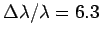 and a
distance11.4of 1800Mpc.
and a
distance11.4of 1800Mpc.
For a distance of
 to 3C 273, the distance modulus
 . The apparent magnitude of 3C 273 is
 (in the V-band), hence the absolute magnitude is
 . Since the Sun's absolute magnitude
 -ish, it
implies that 3C 273 is
-ish, it
implies that 3C 273 is
 times brighter
than the Sun, or 100 times as bright as the entire MW. Give or take a
factor of a few. What kind of object can be so small yet so
tremendously powerful?
times brighter
than the Sun, or 100 times as bright as the entire MW. Give or take a
factor of a few. What kind of object can be so small yet so
tremendously powerful?
Since then, many more QSOs have been discovered, we know several
hundred thousands of them by now. The current11.5 record holder has
 . In terms of recession velocity, this is 6
times the speed of light (!), showing that interpreting such a redshift
in terms of Doppler shift is not a good idea11.6. The luminosity of the brighter QSOs can
range up to
. In terms of recession velocity, this is 6
times the speed of light (!), showing that interpreting such a redshift
in terms of Doppler shift is not a good idea11.6. The luminosity of the brighter QSOs can
range up to  times the luminosity of the MW.
The shear luminosity of QSOs alone already suggests we are looking at something unusual. In addition, some of these QSOs have radio-lobes which are tens of times the size of a galaxy. What is the engine that powers them?