


 |
(11.1) |
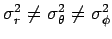
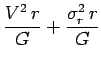
If the velocity dispersion does not rise very rapidly,
 constant, then the density must rise very rapidly,
 hence
hence
 . So a rapid
increase in density of light toward the centre could signify the
presence of a SMBH.
. So a rapid
increase in density of light toward the centre could signify the
presence of a SMBH.
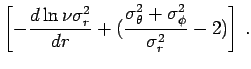
However, the region where the MDO dominates may be very small, of order
 . As viewed from Earth for
a QSO at distance
. As viewed from Earth for
a QSO at distance  , the angular extent will be
 . Such
a small extent is hard to see from the ground (due to atmospheric
seeing), and Hubble Space Telescope (HST) will be needed.
. Such
a small extent is hard to see from the ground (due to atmospheric
seeing), and Hubble Space Telescope (HST) will be needed.
Now some galaxies do indeed show a dramatic increase in brightness - a
cusp - toward the centre, even at HST resolution. Unfortunately, it is
also known that the velocity dispersion 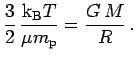 is not constant. So
we cannot claim this proves the presence of a MDO - it's a good
indication though.
is not constant. So
we cannot claim this proves the presence of a MDO - it's a good
indication though.