


 in
in  , then you have to sum
over . So
, then you have to sum
over . So
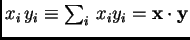 is a short
hand for the scalar product of
is a short
hand for the scalar product of
 and
and
 .
.
We've seen that the stars in spiral disks are all on nearly circular orbits. Although some of the smaller Es sometimes rotate as well, the angular momentum of stars is not sufficient to balance gravity. So we need to look for another mechanism to prevent collapse. Basically, it's the velocity dispersion of the stars that balances gravity, much like it is a pressure gradient in the gas that balances gravity in a star. For this reason, Es (but also spiral bulges, and globular clusters for example) are called hot stellar systems.
The Jean's equations relate the stellar velocity dispersion,
 with the gravitational potential of the system, and
are the stellar analogue of the equation of hydrostatic equilibrium
with the gravitational potential of the system, and
are the stellar analogue of the equation of hydrostatic equilibrium
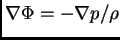 in a star. They do not describe the
properties of the orbits of a single star, but rather assume one can
use averaged properties. To investigate whether such an approach makes
sense, I first need to introduce the concept of relaxation time.
in a star. They do not describe the
properties of the orbits of a single star, but rather assume one can
use averaged properties. To investigate whether such an approach makes
sense, I first need to introduce the concept of relaxation time.