


Over the past couple of years, Genzel and collaborators measured the
kinematics of stars close to the MW centre from near-IR
spectra11.12 They also determined very accurate positions of the
stars. By doing this over several consecutive years, they were able to
measure not just the 3D proper motions of the stars, but also measure
accelerations. In fact they were able to follow one star over
nearly a whole orbit, when it swung passed the centre at velocities
approaching 1000km s .
.
So first of all, they demonstrated that there is indeed a very massive
`dark' object in the centre of the MW. Using Kepler's laws,
they were able to put very stringent limits on the mass of the central
concentration,
 , in a region
smaller than 0.006, implying an enormous mass density higher than
, in a region
smaller than 0.006, implying an enormous mass density higher than
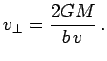 . This leaves almost no room to
escape the conclusion that the MDO is indeed a SMBH, at least in the MW.
. This leaves almost no room to
escape the conclusion that the MDO is indeed a SMBH, at least in the MW.
The presence of the large mass is also supported by the presence of
other very high velocity stars. From that, and from the fact that the
putative centre, i.e. the radio source Sagittarius A itself does not
seem to move, Genzel derived a lower limit to the density of
 .
.
Incidentally, they also showed that the velocity dispersion remains nearly isotropic, and so unless the MW is peculiar, this then strengthens the case for SMBHs in other galaxies, from the arguments in the previous section.