


Ellipticals (also called early type galaxies)
 , where
 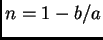 , and
, and  and
and  are the semi-major and
semi-minor axis of the ellipse. So, an E0 is round, and an E7 is
flattened,
are the semi-major and
semi-minor axis of the ellipse. So, an E0 is round, and an E7 is
flattened,  is about how flattened E's get. A 3D ellipsoidal
shape, with semi-axes , and
is about how flattened E's get. A 3D ellipsoidal
shape, with semi-axes , and  (ordered as
 ), is
called oblate when
), is
called oblate when  (a pancake), prolate when
  (a cigar),
and tri-axial when
(a cigar),
and tri-axial when  (a squashed American football). We think
that E's are probably tri-axial.
(a squashed American football). We think
that E's are probably tri-axial.
Spirals (or late type galaxies)
We will see later that the SB as a function of radius are quite different for these two types.
These are the archetypal properties of such systems. For example, some ellipticals do have a lot of dust, as well as evidence for star formation. Some even have a small disk. Given that some spirals have a very large bulge, and some elliptical have a disk, the distinction between the two types is not always as clear as you might think. Clearly it would be interesting to know what processes are responsible for forming an elliptical vs a spiral.
Both types are seen to have hundreds and sometimes thousands of globular clusters (GCs for short). These are very dense, spherical,
gravitationally bound systems of typically  to
to  low mass
stars, and they are usually found in a spherical distribution around
their parent galaxy. The Milky Way has about 150 of them, but some of
the larger Es have several tens of thousands.
low mass
stars, and they are usually found in a spherical distribution around
their parent galaxy. The Milky Way has about 150 of them, but some of
the larger Es have several tens of thousands.
There are many schemes for classifying galaxies, based on their morphology. What do you expect from a good classification? Ideally, it should be unambiguous, and have some physical basis behind it. Also, since for most galaxies you don't know the distance, it should be independent of distance. The Hubble sequence (Fig. 1.1) is still very popular. It divides galaxies in ellipticals and spirals. Spirals are divided in two strands, according to whether they are barred (SB), or not (S). The sequence has the shape of a tuning fork - the Hubble tuning fork. Along the handle of the tuning fork, the range goes from E0 to E7. The sequence then forks, toward the top are unbarred spirals - denoted S, along the bottom are barred spirals, denoted SB. Both strands are further divided along the sequence (away from the handle), as Sa toward Sc, and analogously SBa to SBc, depending on the relative strength of bulge to disk, and, correlated with this, how tightly/loosely wound the arms are. Sa's and SBa's have a large bulge and tightly wound arms, Sc's and SBc's have a much smaller bulge, and more loosely wound arms. Finally, any galaxy that does not fit into the sequence, is called irregular (Irr).
The physical scale of galaxies is huge: E's can have masses from as
little as
 to as much as
 , with linear sizes
ranging from a few tenths of a kpc to hundreds of kpc. In contrast,
spirals tend to be more homogeneous, with masses
, with linear sizes
ranging from a few tenths of a kpc to hundreds of kpc. In contrast,
spirals tend to be more homogeneous, with masses
 -
-
 , and disk diameters from 5 to 100kpc or so.
Hubble thought (incorrectly) that this sequence was due to evolution, where galaxies evolve from being E0s, toward Sa or Sba, and later evolving in the more loosely wound Sc's or SBc's. Therefore these types are also called early type and late type. So E's are also called early type, and Ss are called late type. And an Sc is a late-type spiral, and Sa an early type spiral. We know now that this is not the way galaxies evolve, yet these names are still widely used.
There are other reasons why this is not a particularly good scheme. For example, galaxies may look quite different, depending on which filter you use.
Another type you'll often come across are cD galaxies, which stands for central Dominant: these are very large ellipticals, found in the centres of clusters, with a faint but very large outer halo of stars.
Another type are called S0 (or SB0 when barred) or lenticulars: they are the divide in Hubble's sequence between E and S. They have disks without gas or dust, and no recent star formation.
Galaxies can fail to fit in the sequence, for example because they recently had a tidal encounter with another galaxy. This typically leads to spectacular tidal arms, like the case of e.g. the Antennae.
Now, most smaller galaxies are of the Irregular type: no disk, no nice spherical distribution of stars, but more a loose aggregate of stars, like for example the Magellanic Clouds. Since there are far more small than large galaxies, most galaxies are in fact of type Irr. The aim of these lectures is to understand which types of observation can be used to describe these different types a bit better (the `biology bit of the lectures'), and also try to understand the physical processes behind them. May be you'll be surprised to learn that, for many of the most basic questions you might think of, such as - why are some galaxies of type E, and others of type S?, or, why do Ss have spiral arms? - we are only just beginning to understand the underlying physics, and we have by no means a well defined, generally accepted textbook answer. May be something for you to work on, when you start doing astronomy research yourself?
