


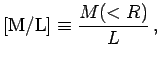
 for the 2dF, about
  for the SDSS. So what kind of
general trends do they uncover? We will discuss some of these here.
for the SDSS. So what kind of
general trends do they uncover? We will discuss some of these here.
The distribution of galaxies probably traces to some extent the
distribution of dark matter in the Universe. For example, we've seen
that there is evidence for a lot of dark matter in the Universe as a
whole (from the cluster argument), but also in individual galaxies,
groups and clusters. And so, since we find that galaxies are
distributed very inhomogeneous in groups and clusters, presumably
also the dark matter is distributed in an inhomogeneous fashion. How?
And what process determines this in the first place?
We have a good idea of how the dark matter is distributed on a
cosmological scale, from some general considerations, backed-up by
observations of the micro-wave background (i.e. the sea of photons
left-over from when the Universe was still hot). Given this input, we
can use numerical simulations to predict how dark matter is clustered
on large scales. The nice part of the story is that this theory is
highly predictive, and does predict structures in the galaxy
distribution very similar to what we observe: a filamentary pattern
delineating large regions of space devoid of galaxies, called `
voids', with regions of high galaxy density, clusters of galaxies,
at the intersection of the filaments.